Introduction
White top testliner is usually the better choice when a corrugated box needs a bright printable outer surface at a controlled cost, while kraft liner board is generally selected when structural reliability, puncture resistance and demanding transport conditions matter more than a white presentation layer. The final decision should consider fiber furnish, basis weight, burst performance, compression requirements, printing method, moisture exposure and packed-product value—not color or price alone.
What Are White Top Testliner and Kraft Liner Board?
Both grades are used as the flat facing layers of corrugated board. The fluted medium sits between the liners and creates the structure used for shipping cartons, retail boxes and displays. According to CEPI’s Pulp and Paper Industry: Definitions and Concepts, kraftliner and testliner belong to the case-material category used for corrugated boxes, transport packaging, storage and product displays.
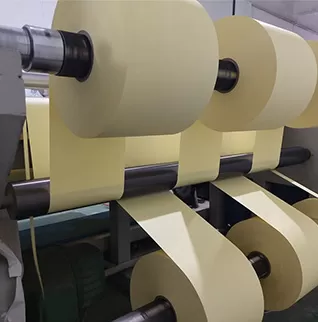
White top testliner has a white or coated top ply over a darker recycled-fiber base. The white face improves the presentation of graphics, barcodes and product information, while the recycled backing helps control material cost. China Paper’s white top testliner is available in a listed basis-weight range of 125–235 GSM, with custom roll or sheet dimensions for corrugated packaging production.
Kraft liner board has a brown or white surface and is chosen mainly for functional liner performance. However, grade terminology is not completely uniform across suppliers and markets. China Paper’s current kraft liner board specification identifies recycled pulp and an 80–440 GSM range. Buyers should therefore request the actual fiber-furnish declaration rather than judging the material only by its commercial name.
Kraft liner board should also be distinguished from kraft paper. Sack paper, wrapping paper and bag-making grades may have different tensile, tear, moisture and converting requirements from linerboard specifically designed for corrugation. China Paper lists its kraft paper mainly for bags, envelopes, wrapping and other flexible packaging applications.

Strength and Corrugated Board Performance
Strength should be evaluated at two levels: the liner itself and the completed corrugated board. The liner contributes tensile strength, burst resistance, puncture resistance and surface durability. The medium, flute profile, adhesive, moisture content and combination of inner and outer liners determine how the finished board performs during stacking, handling and distribution.
The Fibre Box Association’s explanation of corrugated board describes corrugated material as linerboard bonded to a fluted medium. The flutes act as structural columns when the board stands on edge and also contribute cushioning and bending rigidity. A heavier liner therefore does not automatically create a stronger box if the flute, adhesive bonding or overall board design is unsuitable.
White top testliner provides sufficient strength for many retail, e-commerce and consumer-goods cartons. Its main advantage is balancing a printable white surface with a cost-efficient recycled-fiber base. It is particularly useful where graphic presentation and normal distribution performance are both required.
Kraft liner board is often preferred for export cartons, appliances, industrial products and heavier packed loads. China Paper describes its grade as providing burst strength, ring-crush resistance and stacking performance for corrugated boxes and industrial shipping applications.
Buyers can include bursting strength in the purchase specification. ISO 2759:2014—Board: Determination of Bursting Strength defines a method for measuring board under increasing hydraulic pressure and applies to corrugated and solid fibreboard within the stated test range. Results should be compared under the same grammage and moisture conditions, and burst data should not replace compression testing of the completed box.
Printability, Color and Surface Appearance
White top testliner has the advantage when packaging must carry brand colors, fine text, barcodes or retail-facing graphics. Its white surface reduces the influence of a brown substrate and can support cleaner flexographic printing, stronger contrast and more predictable color reproduction.
Surface smoothness, brightness, absorbency and coating consistency affect ink transfer. A sheet may appear white but still produce mottling, pinholes or uneven solid-color areas if the surface is too porous or inconsistent. Buyers should request printed drawdowns or production trials using the intended ink system rather than approve the material from an unprinted sample.
Brown kraft liner creates a natural packaging appearance and works well for logos, line art, handling symbols and limited-color branding. White ink, opaque inks or additional print stations may be required when a design needs bright colors on a brown background, which can affect printing cost and line speed. China Paper lists its white top testliner with a brightness of 82±2% and gloss of at least 40%. These values are useful for preliminary comparison, but final print approval should still be based on the intended press, ink coverage, screen detail and whether the project uses pre-print or post-print production.
Cost and Corrugated Packaging Uses
White top testliner is commonly selected when the outer liner must look cleaner than ordinary brown board but a premium white virgin-fiber liner would exceed the project budget. Typical uses include:
Branded e-commerce cartons
Beverage and food-transport boxes
Retail-ready packaging
Household-product cartons
Promotional displays
Printed shipping boxes
China Paper positions white top testliner for corrugated boxes, retail packaging, e-commerce packaging, food transportation and other applications requiring both visual presentation and dependable protection. Kraft liner board suits shipping cartons, export cases, appliance boxes and industrial packaging where handling damage or stacking loads create greater risk. It can also be used as an inner liner while white top testliner is used on the outside, allowing the box designer to combine print presentation with structural performance.
Material price per tonne is only one part of total packaging cost. Buyers should also consider:
Basis weight required to meet the target performance
Printing coverage and number of colors
Waste during corrugating and converting
Box failures, damaged products and returns
Freight cost associated with board weight
Stability of repeat supply
Recycled-content or certification requirements
For projects involving several board categories, China Paper’s packaging paperboard range allows buyers to compare white top testliner, kraft liner, duplex board, FBB and grey board according to the final packaging structure and converting process. Buyers sourcing both corrugated cartons and folding cartons can also consult experienced duplex board suppliers to confirm whether coated duplex board is more suitable for the non-corrugated parts of the packaging project.
Selection Table and Buyer Checklist
| Purchasing Factor | White Top Testliner | Kraft Liner Board |
|---|
| Main priority | Print appearance with cost control | Strength and transport reliability |
| Typical surface | White top with darker recycled base | Brown or white, depending on grade |
| Fiber approach | Usually recycled base with printable top ply | Must be confirmed because supplier naming varies |
| Printing performance | Better for brighter colors and detailed branding | Good for simple graphics and natural kraft designs |
| Typical applications | Retail, e-commerce, food transport and displays | Shipping, export, appliance and industrial cartons |
| Main quality risk | Surface variation, coating consistency and print mottle | Furnish ambiguity, incorrect GSM and color limitations |
| Recommended test | Print trial and corrugator run | Strength data and finished-box compression test |
Before requesting a quotation, provide the outer- and inner-liner requirements, GSM, roll width, roll diameter, core size, flute type, printing process, box dimensions, packed weight, stacking height, expected climate conditions, certification needs and annual purchasing volume. Ask for a technical data sheet, representative samples and a trial roll when the project is sensitive to printing consistency, corrugator runnability or box failure. Do not specify only “testliner board” or “kraft liner.” State whether the material will be used as the outer or inner liner, whether a white printing surface is required and which measured properties must be achieved. This makes supplier quotations easier to compare and reduces the risk of receiving different grades under similar product names.
FAQ
Is white top testliner stronger than kraft liner board?
Not as a universal rule. Strength depends on fiber furnish, grammage, layer construction, moisture condition and the completed corrugated-board design. White top testliner often prioritizes printability and cost balance, while kraft liner grades are commonly selected for more demanding transport conditions.
Is testliner board always made from recycled fiber?
Testliner is generally associated with recovered-fiber content, but the exact furnish, white top layer and coating structure vary by grade. Buyers should request a written fiber declaration and technical data sheet for the specific product.
Can white top testliner be used for food packaging?
It can be used for corrugated outer packaging and food-transport cartons when the complete packaging system meets applicable requirements. Direct food contact should not be assumed from the material name; compliance and barrier requirements must be confirmed for the intended application.
Which liner is better for flexographic printing?
White top testliner is generally better for bright colors, detailed branding and retail-facing graphics. Brown kraft liner works well for simpler designs, dark inks, line graphics and packaging that intentionally uses a natural kraft appearance.
Can both materials be used in the same corrugated board?
Yes. A converter may use white top testliner as the outer liner for printing and kraft liner board as the inner liner for strength or cost optimization. The finished board should still be tested under the intended packing and distribution conditions.
What should buyers test before bulk ordering?
Buyers should test basis weight, moisture, caliper, burst or crush-related properties, surface quality, print response, corrugator runnability, adhesive bonding and the compression performance of the finished box.
 English
 français
 Deutsch
 Español
 italiano
 русский
 português
 tiếng việt
 Türkçe
 العربية
 Indonesia