Introduction
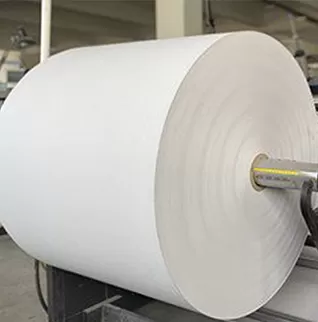
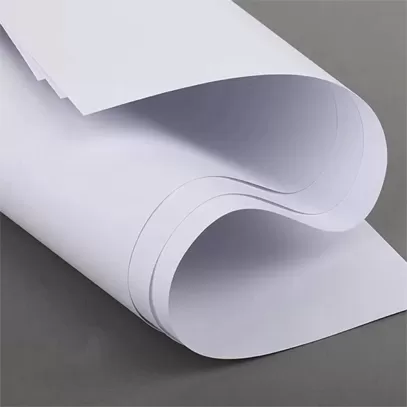
MG Paper, or Machine Glazed Paper, is a type of paper characterized by having one glossy side and one matte side. This unique surface is created during the papermaking process through a special drying technique called the machine glazing process, where one side of the paper is pressed against a highly polished cylinder. Unlike fully coated or double-coated papers, MG Paper achieves its gloss without applying additional coating layers, making it a distinct category within packaging and wrapping papers.
How MG Paper is Made (Production Principle)
The defining feature of MG Paper comes from its manufacturing process.
1.Paper Formation
The paper pulp is formed on a paper machine into a continuous sheet.
2.Initial Drying
The wet sheet is partially dried using standard drying cylinders.
3.Machine Glazing Process
One side of the paper is pressed against a heated, highly polished drying cylinder (Yankee cylinder).
This creates:
A smooth and glossy surface on one side
A relatively rough and natural surface on the other side
4.Final Finishing
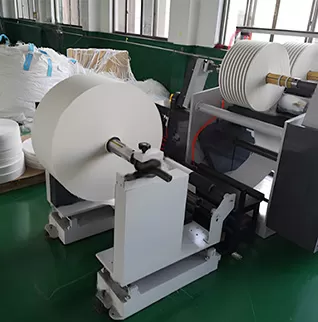
The paper is wound into rolls or cut into sheets depending on application needs.
This process is what differentiates MG Paper from normal kraft paper or coated paper.
Key Characteristics of MG Paper
MG Paper has several technical and functional properties that make it widely used in packaging:
1. One-Sided Gloss Surface
The most recognizable feature is the high-gloss finish on one side, which improves visual appeal without additional coating.
2. Natural Fiber Strength
Since no heavy coating layers are applied, MG Paper retains the natural strength and flexibility of the fiber structure.
3. Lightweight but Functional
It is typically produced in lower GSM ranges, making it suitable for wrapping and flexible packaging applications.
4. Good Print Adaptability
The glossy side supports moderate printing performance, especially for branding and labeling purposes.
5. Breathability
Compared with coated paper, MG Paper maintains better air permeability, making it suitable for food-related applications.
MG Paper vs Other Paper Types
To understand MG Paper more clearly, it helps to compare it with similar materials:
Coated Paper (C1S/C2S): uses coating layers for gloss; MG Paper achieves gloss mechanically
Kraft Paper: typically fully matte and stronger, but less visually refined
Glassine Paper: also glossy but more transparent and grease-resistant
MG Paper sits between kraft paper and coated paper in terms of appearance and performance.
Common Applications of MG Paper
MG Paper is widely used in industries where both appearance and functionality are important.
1. Food Packaging
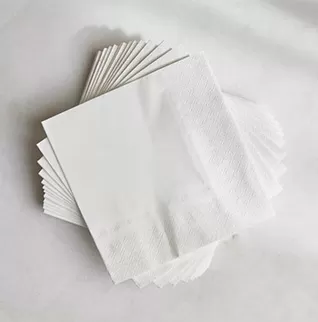
Used for wrapping baked goods, fast food, and dry food products due to its clean surface and breathability.
2. Retail Wrapping
Common in clothing stores, gift wrapping, and branded packaging where presentation matters.
3. Industrial Wrapping
Used as interleaving paper or protective wrapping for lightweight materials.
4. Printing Base Material
Suitable for simple printing applications such as logos, patterns, or product identification.
Why MG Paper is Widely Used
The popularity of MG Paper comes from its balance between:
Cost efficiency
Natural appearance
Functional strength
Moderate printability
It provides a practical alternative to coated papers where full coating is unnecessary but visual enhancement is still needed.
Conclusion
MG Paper is a mechanically finished paper that combines a glossy visual surface with natural fiber performance. Its production process, based on machine glazing technology, gives it unique physical and functional characteristics that make it widely used in food packaging, retail wrapping, and industrial applications. Understanding MG Paper helps clarify its position within the broader packaging paper industry, especially in comparison with coated and kraft-based materials.
 English
 français
 Deutsch
 Español
 italiano
 русский
 português
 tiếng việt
 Türkçe
 العربية
 Indonesia