Introduction
Paper cups have become an essential packaging solution for coffee shops, restaurants, fast-food chains, bubble tea stores, and beverage manufacturers worldwide. As demand for convenient and sustainable packaging continues to grow, choosing the right paper cup size and cupstock paper becomes increasingly important for ensuring product performance, customer satisfaction, and cost efficiency. Whether you are a paper cup manufacturer, converter, distributor, or beverage brand, understanding the relationship between cup sizes, paper grades, and GSM specifications can help you make better purchasing decisions. In this guide, we will explore common paper cup sizes, recommended GSM ranges, cupstock paper types, and how to select the right paper material for different beverage applications.
What Are Paper Cups Made Of?
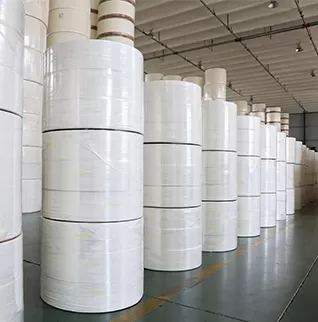
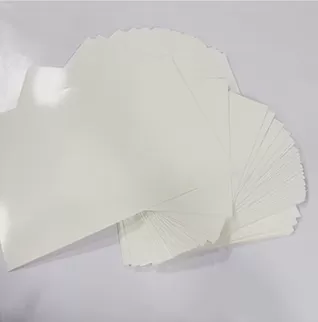
Modern paper cups are typically produced using food-grade cupstock paper. The paper provides rigidity and printability, while a coating layer offers resistance against water, oil, and moisture.
The most common paper cup raw materials include:
Uncoated Cupstock Base Paper
Single PE Coated Cupstock Paper
Double PE Coated Cupstock Paper
PLA Coated Cupstock Paper
Cupstock paper is generally manufactured from 100% virgin wood pulp to ensure food safety, excellent stiffness, and superior printing performance.
Common Paper Cup Sizes Chart
Different beverages require different cup capacities. Choosing the correct cup size improves customer experience and reduces unnecessary material costs.
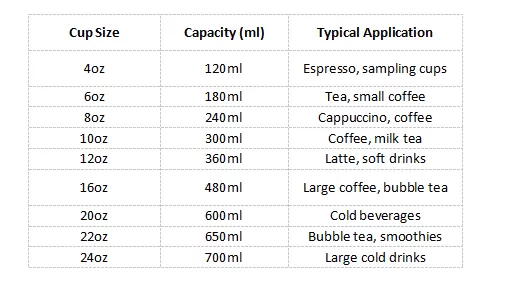
Among these sizes, 8oz, 12oz, and 16oz remain the most popular globally due to their versatility across various beverage categories.
How to Choose the Right Paper Cup Size
1.Coffee Shops
Coffee shops typically require multiple cup sizes to accommodate different customer preferences.
Recommended sizes:
8oz for cappuccino and Americano
12oz for latte and mocha
16oz for large takeaway coffee
These cups usually require excellent stiffness and heat insulation performance.
2.Bubble Tea Stores
Bubble tea and milk tea beverages often contain toppings such as tapioca pearls, jelly, or fruit pieces.
Recommended sizes:
Larger cup sizes help improve presentation while providing sufficient capacity for ingredients and ice.
3.Fast Food Restaurants
Restaurants and takeaway businesses frequently use paper cups for both hot and cold beverages.
Recommended sizes:
These applications typically prioritize cost efficiency and high-speed production compatibility.
4.Beverage Brands and Event Organizers
For promotional activities, tasting events, and product demonstrations, smaller cup sizes are often preferred.
Recommended sizes:
These sizes help reduce waste while maintaining convenience.
Recommended GSM for Different Paper Cup Sizes
Selecting the correct GSM (grams per square meter) is critical for cup strength and performance. The larger the cup size, the higher the required paper weight.
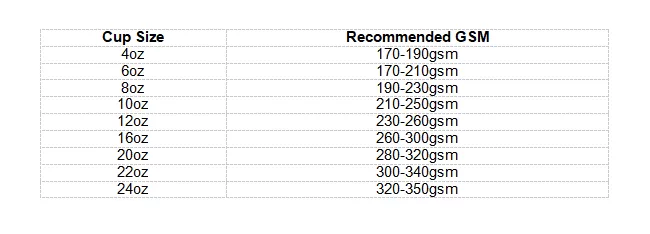
Using insufficient GSM may lead to cup deformation, leakage, or poor customer experience. Conversely, selecting excessively high GSM increases production costs unnecessarily.
Single PE vs Double PE Coated Paper
PE coating plays an important role in preventing liquid penetration.
1.Single PE Coated Cupstock
Single PE coated paper features one polyethylene layer on the inner surface.
1)Advantages:
2)Applications:
2.Double PE coated paper includes PE coating on both sides.
1)Advantages:
Improved moisture resistance
Enhanced structural stability
Suitable for refrigerated environments
2)Applications:
Why Virgin Pulp Cupstock Paper Is Preferred
Most premium paper cup manufacturers choose virgin wood pulp cupstock because it offers:
1. Superior Stiffness
Virgin fiber maintains excellent strength and rigidity, helping cups retain their shape.
2. Better Printing Performance
Smooth surfaces produce sharper graphics and vibrant colors.
3. Food Safety Compliance
Food-grade virgin pulp paper can meet FDA, LFGB, and other food-contact requirements.
4. Consistent Quality
Uniform fiber distribution ensures stable converting performance during cup production.
Sustainability Trends in the Paper Cup Industry
As governments and brands seek more sustainable packaging solutions, paper cups are evolving toward environmentally responsible materials.
Key trends include:
Reduction of plastic content
Recyclable packaging solutions
Renewable raw materials
Water-based barrier technologies
Compostable PLA-coated cupstock
Many foodservice brands are actively transitioning from traditional plastic containers to paper-based alternatives as part of their sustainability commitments.
How to Choose a Reliable Cupstock Paper Supplier
When sourcing cupstock paper, buyers should evaluate suppliers based on several factors:
1.Product Quality
Ensure stable stiffness, bulk, smoothness, and moisture resistance.
2.Production Capacity
A reliable supplier should maintain consistent supply for long-term projects.
3.Food Safety Certifications
Look for suppliers capable of providing relevant food-grade certifications.
4.Custom Specifications
The supplier should support customized GSM, roll width, sheet sizes, and coating options.
5.Export Experience
Experienced exporters can simplify logistics, documentation, and international shipping processes.
Conclusion
Selecting the right paper cup size is only one part of producing high-quality beverage packaging. Equally important is choosing the correct cupstock paper grade, GSM specification, and coating structure. For most beverage applications, matching cup capacity with the appropriate paper weight can improve cup performance, reduce production costs, and enhance customer satisfaction.
Whether you manufacture coffee cups, tea cups, cold drink cups, or foodservice packaging, investing in premium cupstock paper helps ensure consistent quality and long-term business success.
China Paper supplies food-grade Cupstock Base Paper and PE Coated Cupstock Paper in a wide range of GSM specifications, suitable for paper cup manufacturers and packaging converters worldwide.
 English
 français
 Deutsch
 Español
 italiano
 русский
 português
 tiếng việt
 Türkçe
 العربية
 Indonesia