Introduction
As demand for more resource-efficient packaging continues to grow, recycled pulp has become an important raw material for the paper and packaging industry. Recovered fibers from used paper, cartons, and other paper-based products can be processed and reused to manufacture a wide range of packaging materials. From Duplex Board with Grey Back to Corrugated Board and Kraft Liner Board, recycled fiber can play an important role in packaging production. However, the suitable fiber composition depends on the required strength, appearance, printability, converting performance, and end application. Understanding how recycled pulp is used in packaging paper and board can help buyers select the right paper material for their packaging requirements.
What Is Recycled Pulp?
Recycled pulp is produced by processing recovered paper and paperboard products into usable paper fibers. Depending on the type and quality of the recovered material, the process may include sorting, pulping, screening, cleaning, deinking, and other treatments. The recovered fibers are then used as a raw material for producing new paper and board products.
Compared with virgin fiber, recycled fiber has already been processed through a previous paper-making cycle. Therefore, its characteristics can differ depending on the source of the recovered paper, fiber quality, processing technology, and the final product requirements. For packaging applications, the goal is not simply to maximize recycled content. Instead, manufacturers need to achieve an appropriate balance between recycled fiber content, strength, stiffness, surface quality, printability, and cost.
Why Is Recycled Pulp Used for Packaging?
Packaging is one of the major application areas for recycled paper and board. Many packaging products do not require the same level of brightness or fiber strength as premium printing papers, making recycled fibers suitable for a variety of applications.
Some key advantages include:
1. Efficient Use of Recovered Fiber
Using recycled pulp allows fibers from previously used paper products to be processed and incorporated into new packaging materials. This supports more efficient utilization of existing fiber resources.
2. Suitable for Many Packaging Applications
Recycled paper and paperboard can be used for folding cartons, shipping boxes, corrugated packaging, industrial packaging, and other applications where strength and functionality are important.
3. Balance Between Performance and Cost
For many packaging applications, buyers need to consider both technical performance and overall material cost. Recycled fiber-based products can provide a practical option when the application does not require a high proportion of virgin fiber.
4. Supports Circular Packaging Systems
Paper packaging can be collected, sorted, and processed into recovered fiber for further paper production. The use of recycled pulp is therefore an important part of the broader paper recycling system. However, recycled fiber does not automatically mean that every recycled paper product has the same performance. Fiber quality, furnish composition, manufacturing process, and product design all affect the final paper properties.
Duplex Board with Grey Back: A Common Recycled Paperboard
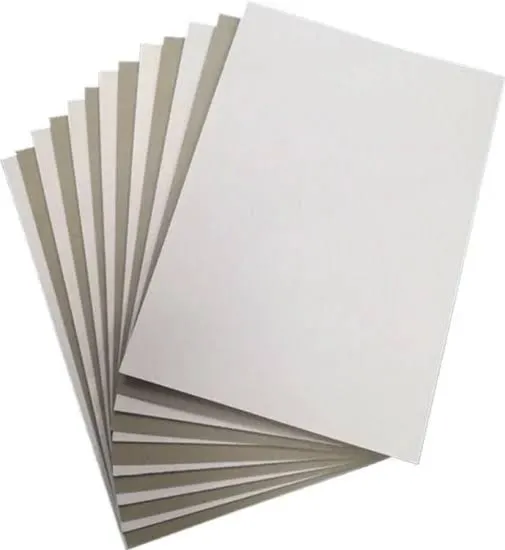
Duplex Board with Grey Back is widely used for general packaging applications. It typically has a white printable surface and a grey reverse side, with a multi-layer structure designed to provide the required stiffness and converting performance. Recycled fiber is commonly used in the middle and back layers of this type of paperboard. The white top layer can be engineered to provide a suitable surface for printing and packaging graphics, while the underlying layers contribute to bulk and stiffness.
Where Is Duplex Board with Grey Back Used?
Typical applications include:
When choosing Duplex Board with Grey Back, buyers should consider more than basis weight. Important factors can include GSM, thickness, stiffness, surface smoothness, brightness, printability, and folding performance. A higher GSM does not necessarily mean that a board is suitable for every application. The relationship between basis weight, thickness, fiber composition, and stiffness should be evaluated according to the packaging structure and converting process.
What Does Recycled Fiber Mean for Corrugated Board Performance?
One common question from packaging buyers is whether recycled fiber can provide sufficient strength for corrugated packaging.
The answer depends on several factors, including:
For shipping boxes and general transport packaging, recycled fiber can be a practical choice when the paper grade is properly designed for the intended application.
Common applications include:
For demanding applications, buyers should evaluate the complete packaging structure rather than judging performance only by the recycled content of the paper.
Kraft Liner Board: Strength Comes First
Kraft Liner Board is widely used as a facing material in corrugated packaging. Traditional kraft liner is commonly associated with virgin kraft fibers because these fibers can provide good tensile strength, tear resistance, and overall structural performance. At the same time, the packaging industry also uses linerboard grades containing recovered fiber. The appropriate choice depends on the required performance, packaging design, recycled-content requirements, and cost considerations.
For heavy-duty transport packaging, factors such as burst strength, tensile strength, tear resistance, compression performance, and moisture resistance can become particularly important. This means that choosing between virgin fiber and recycled fiber should not be based on one factor alone. The right material depends on the specific requirements of the finished package.
Recycled Fiber vs. Virgin Fiber: Which Is Better?
There is no universal answer to whether recycled fiber or virgin fiber is better.
Virgin fibers are generally longer and can provide strong mechanical properties, while recycled fibers may have shorter fiber lengths because they have already undergone one or more paper-making cycles. However, modern recycling and paper-making technologies can improve the usability and consistency of recovered fibers. In many packaging applications, recycled fiber can provide an effective balance between performance and resource efficiency.
The better question for buyers is:
Which fiber composition is suitable for my packaging application?
For example, a general folding carton may prioritize printability, stiffness, and cost efficiency. A transport carton may place greater emphasis on compression strength and durability. A heavy-duty packaging solution may require a higher-performance liner with specific strength characteristics.
How to Choose the Right Recycled Paper Product
When purchasing recycled paper or paperboard for packaging, consider the following factors:
1. End Application
Start with the finished packaging application. A folding carton, shipping box, and industrial package can have very different material requirements.
2. Required Strength
Evaluate the mechanical properties needed during converting, stacking, transportation, and storage. Depending on the application, compression, tensile, burst, or tear performance may be important.
3. GSM and Thickness
Basis weight and thickness influence material consumption, stiffness, and packaging structure. They should be considered together rather than separately.
4. Surface and Printability
For printed packaging, surface smoothness, brightness, ink absorption, and printing performance can affect the final appearance.
5. Fiber Composition
The proportion and quality of recycled and virgin fibers can influence the physical properties of the finished paper. Buyers should select the fiber composition according to actual performance requirements.
6. Packaging and Shipping Requirements
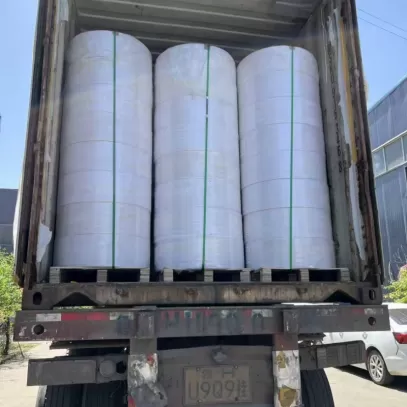
Paper products also need to maintain their properties during transportation and storage. Proper packaging, moisture protection, roll or sheet configuration, and loading methods should therefore be considered when purchasing packaging paper in international markets.
Conclusion
Recycled pulp has become an important raw material for modern packaging paper and board. With appropriate fiber selection and manufacturing technology, recycled fibers can be used in products ranging from Duplex Board with Grey Back and corrugated packaging materials to various linerboard grades. The key is not simply to ask how much recycled fiber a paper product contains. Buyers should consider the complete balance of strength, stiffness, GSM, thickness, printability, converting performance, application requirements, and cost.
For packaging manufacturers, selecting the right recycled paper product means matching the material to the job it needs to perform. Whether the requirement is a printable folding carton, a reliable shipping box, or a stronger corrugated packaging structure, understanding the characteristics of recycled pulp can make the purchasing decision more precise and effective.
 English
 français
 Deutsch
 Español
 italiano
 русский
 português
 tiếng việt
 Türkçe
 العربية
 Indonesia